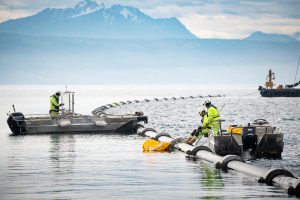

Choosing the right flood irrigation pipe starts with understanding how much water needs to be moved, how far it must travel, the property layout, and the conditions the pipe will face once installed.
For Australian farms, those factors can vary widely between paddocks, irrigation bays and water sources. A pipe that works well for a short run may not suit a longer transfer line, while a system supplying several areas may need more capacity and better control at branch points.
The aim is to match the pipework to the actual irrigation task rather than selecting on diameter alone.
Start With the Required Water Flow
The amount of water that needs to reach the field should guide the first stage of selection.
Flood irrigation usually relies on moving a substantial volume of water within a practical watering window. The required flow can vary depending on paddock size, soil conditions, crop type, and whether one or several areas are being supplied.
This is why pipe diameter, available pressure and line length need to be considered together.
A smaller line may restrict delivery over long distances, while an unnecessarily large diameter can add cost without meaningfully improving the system.
The importance of the water source should also be considered. A pipeline drawing its water from a channel, a dam, or a storage basin will behave differently from one that uses a pump. Understanding the flow and pressure available at the source will make it easier to select the appropriate agricultural pipe.
Look at Distance and Changes in Elevation
Longer pipe runs and uneven terrain can affect how water moves through the system.
As water travels through a pipeline, friction creates pressure loss. Bends, tees, valves and other fittings also influence flow. Where the route climbs or falls across the property, elevation becomes another factor.
For farms with long distances between the source and irrigation areas, these details can affect both diameter and pressure requirements.
A practical design should consider the entire route rather than measuring only the straight-line distance.
This is especially relevant on Australian properties where irrigation infrastructure may need to cross roads, drains, field boundaries or changing ground levels before reaching the intended bay.
Match the Material to Farm Conditions
The pipe material needs to suit both the physical environment and the hydraulic requirements.
HDPE is commonly used for agricultural water transfer because it is lightweight compared with many traditional materials, corrosion-resistant, and available in a broad range of diameters. It can also be joined into continuous systems using compatible fittings and fusion methods.
These characteristics can be useful where lines are exposed to outdoor conditions, buried across long distances or installed in areas where corrosion is a concern.
However, material choice should still be based on the project. Pressure rating, temperature, UV exposure, installation method and connection requirements all need to be considered before a specification is finalised.
Think About Fittings as Part of the Main Design
The performance of the line depends on more than the pipe itself.
Elbows, tees, flanges, valves and branch connections all affect how water moves through the system and how easily different areas can be controlled. The agricultural range includes these types of fittings for HDPE piping systems.
Valve placement is particularly important where one main line supplies several irrigation areas.
Good positioning can allow individual sections to be isolated without shutting down the entire network. It can also make maintenance easier if a fitting or branch needs attention later.
For larger properties, planning connection points before installation can reduce the need to cut into an established line when another paddock or irrigation bay is added.
Consider How the Pipe Will Be Installed and Maintained
Installation conditions can influence the most practical option.
Some agricultural pipelines are buried, while others may be installed above ground or run alongside channels and access tracks. The choice affects how the pipe is supported, protected and accessed later.
The route should allow for maintenance where possible.
Valves, joins and other important components should not be placed where they are difficult to reach with farm machinery or service equipment. Likewise, areas exposed to repeated vehicle movement may need additional protection.
For Australian farms operating across large areas, maintenance access can be just as important as the initial installation speed.
A line that is technically suitable but difficult to inspect or repair may create unnecessary operational problems later.
Allow for Future Irrigation Changes
A well-planned flood irrigation system should leave some room for the farm to change.
Additional paddocks, new crop rotations, altered field layouts or increased water storage can all change demand over time.
That does not mean every project should be oversized. Instead, likely expansion points can be identified early and incorporated into the layout where practical.
A branch connection left in a sensible position today may make a future extension much easier.
This is particularly relevant for properties gradually upgrading older irrigation infrastructure rather than replacing the entire network at once.
Choosing Flood Irrigation Pipe for Australian Farms
The best flood irrigation pipe is the one that matches the required flow, route length, elevation, operating pressure and field layout.
AGRU Australia supplies HDPE piping systems, fittings and agricultural water transfer solutions for irrigation and other farming applications across Australia. Its agricultural range includes HDPE pipe, large-diameter options, and compatible fittings for projects where dependable water movement is required.
For new systems or upgrades to existing irrigation infrastructure, providing details such as required flow, line length, elevation, connection points and expected future expansion can help narrow down an appropriate specification.